
Why your next laptop or smartphone will cost more due to the AI-Driven SSD & RAM Shortage?
The article explains how accelerating AI development is driving global SSD and RAM shortages. Memory manufacturers are prioritising high-margin AI data centre demand, reducing consumer supply. This structural shift is expected to raise prices, limit availability, and delay consumer electronics worldwide.
1/29/20262 min read
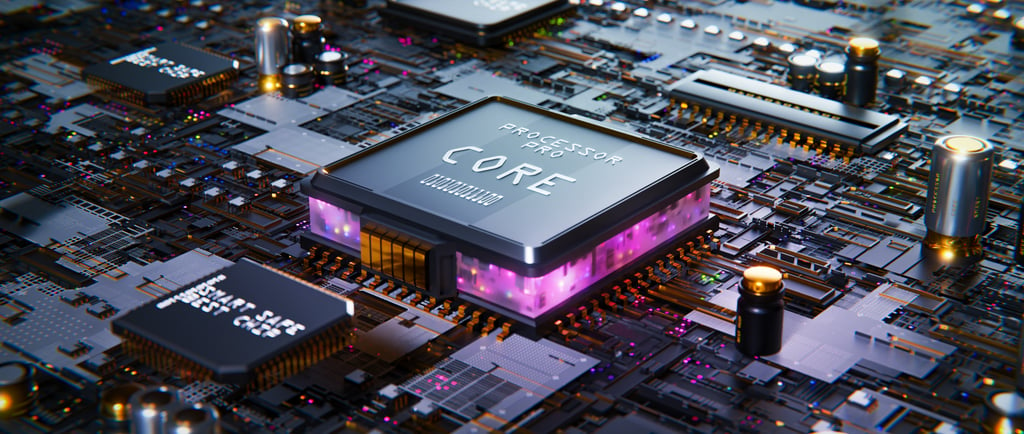
According to Reuters (2025) in 2026 and beyond the global semiconductor industry will be seeing changes and challenges that have not been previously experienced. The resurgence of artificial intelligence (AI) development has created negative ripple effects within the electronics supply chain for two fundamental components: random access memory (RAM for short) and solid-state drive memory (SSD for short).
RAM is a device’s short-term working memory. It temporarily stores data that the processor needs to access quickly while a device is running.
When you open an app, load a website, edit a document or switch between programs, the data required for those tasks is loaded into RAM. Because RAM is extremely fast, it allows the processor to retrieve information almost instantly, ensuring smooth performance and responsiveness.
An SSD (Solid-State Drive) is a device’s long-term storage. It permanently stores the operating system, applications, files, photos, videos and data even when the device is powered off.
Unlike older hard disk drives, SSDs use flash memory with no moving parts. This makes them significantly faster, more reliable and more energy efficient. When you turn on a device, the operating system is loaded from the SSD into RAM so the processor can work with it efficiently.
What is causing the shortage?
At the centre of the shortage is a radical shift in how memory suppliers are allocating their production capacity. According to CNBC (2026) the world’s three major memory producers (Micron Technology, Samsung Electronics and SK Hynix) have now focused their production capabilities of wafer capacity in creating high-end memory used in AI data centres and accelerators. These include High-Bandwidth Memory (HBM) and advanced DDR5/LPDDR5X modules that power GPU clusters (Graphics Processing Units), AI inference hardware and cloud infrastructure.
Contracts with hyperscalers and AI firms are massive. In some cases, deals effectively book out production years in advance, locking in most of the available supply. Industry sources suggest that OpenAI alone may commit hundreds of thousands of wafers per month for its Stargate infrastructure, tying up valuable DRAM capacity.
This competition is not cyclical, it is structural. Companies building AI hardware are prepared to pay premium prices for memory components and sign long-term supply agreements, pushing consumer-focused segments to the back of the queue. The components historically had little to no profit margins and suppliers are now looking to recoup and grow themselves by doing this.
What this means for you?
Retail outlets in some regions have even begun placing purchase limits on memory products as supplies tighten. OEMs (Original Equipment Manufacturers) such as Dell, HP and ASUS are warning of constrained memory stocks, forcing them to either stockpile components or adjust their product releases. Higher prices on new laptops, smartphones, TVs and gaming consoles as memory costs feed into device pricing. For the industry, these shortages underscore the growing influence of AI on the broader global supply chain; not just in high-end servers but down to the devices millions of people use every day.
In Conclusion
The upcoming shortages of SSD and RAM will not be brief hiccups. They will result in strategic shifts of where memory supply goes to, driven by the economics of the AI boom. While this will generate record profits for chipmakers and fuelled by the rapid AI infrastructure growth, it will also tighten consumer markets, reshaped factory strategies and squeeze stock levels worldwide.
For consumers, that means higher prices, fewer choices and longer waits. A stark reminder that the components inside your next smartphone or laptop are now part of a much bigger global technological race.
Our Socials
Join us on our journey
Contact
Connect with us
+27604552385
Copyright © 2025 Presence - Digital Transformation Business. All rights reserved.